WBDBO is perhaps the most important abbreviation in passive fire safety. It stands for resistance to fire penetration and fire spread: the time, in minutes, it takes for a fire to spread from one spatial area to another. In this article, you'll learn what the requirement entails, how it's determined, and what you need to do to demonstrably comply with it.
Fire penetration and fire spread: the difference
Fire penetration is the spread of fire through through a separating structure: via a wall, floor, door, or penetration. Fire spread is the spread of fire via the outside air: from a window to the window above it, or to an adjacent building. The WBDBO requirement combines both routes into a single figure.
Which values apply?
The Besluit bouwwerken leefomgeving (Bbl) generally requires a WBDBO of at least 60 minutes, and in a number of situations (for example, to another building or with certain use functions) 30 minutes. To a additionally protected escape route stricter requirements often apply. The exact applicable value depends on the use function, building height, and construction year; your fire safety consultant or the permit drawing will provide clarity.
| Situation | Typical WBDBO requirement |
|---|---|
| Between two fire compartments | 60 minutes |
| To an adjacent plot / building | 30 minutes (each building bears half) |
| To an additionally protected escape route | 30-60 minutes, depending on the function |
| Within a sub-fire compartment (healthcare) | 20-30 minutes smoke-resistant, plus door requirements |
How is the WBDBO determined?
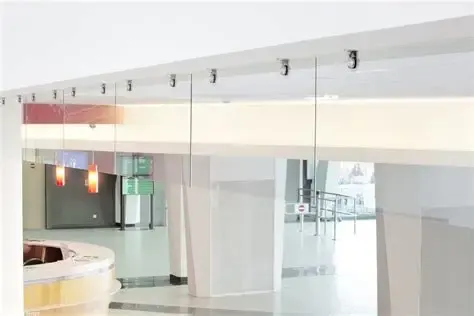
The determination method is set out in NEN 6068. That standard translates the fire resistance of all individual components of a separation – the wall itself, the door, the fire-resistant glass, every penetration – into one combined resistance. The weakest component is decisive: a 60-minute wall with an unsealed cable penetration does not achieve 60 minutes. Since 2020, the Bbl has also explicitly required smoke resistance in accordance with NEN 6075 (the WRD, resistance to smoke leakage), because smoke is often lethal before fire is.
Where things go wrong in practice
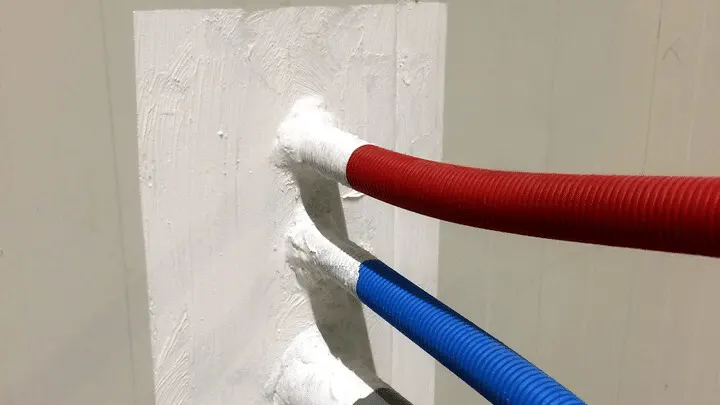
- Penetrations. Unsealed or incorrectly sealed cable and pipe penetrations are by far the most common cause of WBDBO failure.
- Connection details. The joint between a fire-resistant wall and the floor above, or around a frame, is often forgotten.
- Later modifications. A single new cable through an existing seal invalidates the certification.
- Doors. A fire door that fails to latch shut due to a badly adjusted closer doesn't count.
How do you demonstrably comply with it?
- Map out the compartment boundaries. Which walls and floors are fire separations, and what WBDBO requirement applies to them?
- Inventory every penetration. Every door, every window, every penetration on that boundary.
- Repair with tested systems. Both the product and the method of application must fall within the valid classification.
- Record it. Per component: location, type, installation date, certificate, and photo – in a logbook that you can hand over in one go during an inspection.
This article is informational and does not replace advice for your specific building. Want to know whether your compartmentalization meets the required WBDBO? Request an inventory or first take the free quickscan.
Frequently asked questions
That the separation between two spatial areas must resist a fire for at least 60 minutes, calculated over both the route through the structure (fire penetration) and via the outside air (fire spread).
No. The fire resistance of the wall is one component. The WBDBO is the combined resistance of the entire separation, including doors, glass, and penetrations, determined in accordance with NEN 6068.
Yes. Since 2020, the Bbl has required smoke resistance in accordance with NEN 6075 (the WRD) alongside the WBDBO, because smoke poses the greatest danger to people fleeing.
Want to know more about fire-resistant separating structures?
Walls, ceilings, and flame barriers that divide your building into safe, manageable fire compartments.
View this service