You budget for fire protection by establishing which provisions are present, what needs to be done to them and when. Then distinguish between repairing existing defects, recurring inspections and maintenance, and future replacement.
That prevents a single catch-all ‘fire safety’ item ending up in the long-term maintenance plan without clearly defined work or a cost breakdown. It also helps an HOA board or property manager explain which budget is needed now and what needs to be reserved for later.
Why fire protection deserves its own place in the maintenance plan
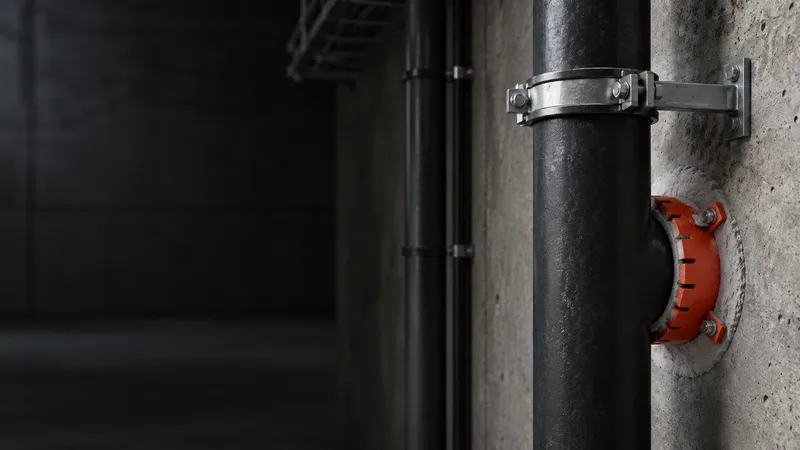
Fire-resistant walls, floors, doors and penetration seals help limit the spread of fire. Some of these are out of sight, for example above a ceiling or in a service shaft.
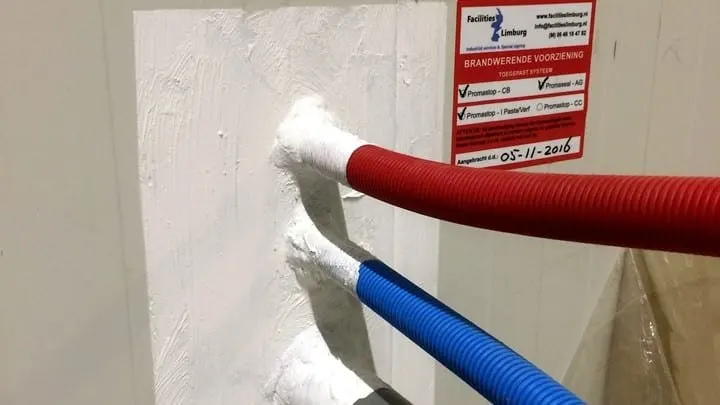
Defects can arise during renovations and installation work. Think of a new cable through a fire separation, or an opening that was not properly restored after work. Damage and wear of moving parts also deserve attention.
An existing maintenance budget therefore does not automatically give a complete picture of fire safety. Check which provisions have actually been surveyed and which inspections are part of your maintenance contracts.
Moreover, a condition assessment under NEN 2767 is not the same as a full fire safety assessment. NEN distinguishes between the technical condition assessment and additional specialist inspections. Agree the required scope of the survey explicitly.
1. Start with a survey that is suitable for budgeting
A useful baseline survey describes the provisions present and their condition at the time of the survey. Counting penetrations and doors alone is not enough: their function, design and accessibility also determine the work required.
Ask the inspector to record for each component:
- Location and identification: where is the component, with a recognisable code on the drawing and photo?
- Function and basis for assessment: what fire- or smoke-resisting performance is needed here, and what is that assessment based on?
- Situation found: what is in order, what is defective and where is information missing?
- Remedial measure: what needs to be adjusted, repaired or replaced?
- Urgency and cost basis: when does it need to happen, and which quantities are needed for the estimate?
Also have it recorded which spaces and components were not accessible. A closed shaft or inaccessible ceiling is a limitation of the survey, not confirmation that everything there is in order.
Are additional openings or investigations needed? Include a separate investigation assignment and budget for them. Keep established repair costs and work that is still uncertain clearly apart.
2. Budget per type of work
A general amount per square metre of floor area can help with an initial rough comparison, but is usually not enough for an execution budget.
Choose the unit that suits the work. For penetrations, for example, it is about numbers and types; for wall repairs, a price per square metre may be exactly right.
| Component | Usable budget unit | Also record |
|---|---|---|
| Cable and pipe penetrations | Per penetration, broken down by type and size | Wall or floor, pipe material, dimensions and required solution |
| Joints and connections | Per linear metre | Joint width, substrate and construction detail |
| Fire-resistant walls or cladding | Per m² or defined repair item | Build-up, connections and restoration of finishes |
| Fire- and smoke-resisting doors | Per door assembly or maintenance task | Door leaf, frame, seals, hardware and any door closer |
| Fire dampers | Per damper, function test or maintenance task | Make, type, accessibility and maintenance instructions |
| Inspection and documentation | Per defined inspection round, property or hour | Scope of the survey, reporting, drawings and handover inspection |
A unit price is only useful when it is clear what work it covers. Two openings of the same size may require a different solution because of differences in pipes or separating constructions.
The products chosen must also be suitable for the application. A product certificate alone does not prove that the complete installation meets the requirements.
Include the additional costs too
Check whether quotations take into account:
- making shafts and ceilings accessible;
- scaffolding, aerial work platforms or other facilities;
- removing unsuitable seals;
- restoring finishes that were opened up;
- access to homes and coordination with residents;
- handover inspection, photos and updating of drawings;
- VAT and the price level on which the estimate is based.
Avoid double counting: if documentation is already included in the unit price, it should not appear again as a separate item.
3. Make the calculation verifiable
Use this structure for each type of work:
Quantity × unit price + additional costs = estimated execution costs.
Then show any uncertainties separately.
Fictitious calculation example
The amounts below have been chosen solely to illustrate the calculation method. They are not market prices or Grazy rates.
| Budget item | Calculation | Amount excluding VAT |
|---|---|---|
| Repair of one specified type of penetration | 20 × €100 | €2.000 |
| Specified maintenance of door assemblies | 6 × €150 | €900 |
| Making accessible and restoring finishes | Fixed item | €600 |
| Handover inspection and documentation | Fixed item | €500 |
| Subtotal | €4.000 | |
| Assumed contingency margin for this example | 10% × €4.000 | €400 |
| Total estimated | €4.400 |
A 10% margin is not a fixed guideline. Choose a well-founded margin based on what is still unknown. Where many components are inaccessible, additional investigation may make more sense than a larger provisional sum.
For future execution years, also state the price indexation chosen. Before awarding the work, check whether quantities, prices and work still match the current situation.
4. Let the repair deadline follow from the assessment
A long-term maintenance plan spreads work and expenditure over several years. That spread must be consistent with safety and the requirements that apply to the building.
For each defect, have it assessed:
- which measures are needed immediately;
- whether temporary measures are needed and adequate;
- within what period permanent repair must take place;
- which maintenance or replacement can responsibly be scheduled.
Inclusion in the long-term maintenance plan is not permission to let a dangerous situation persist. The Informatiepunt Leefomgeving (the Dutch government's information point for the Environment and Planning Act) states that allowing a fire-unsafe situation to continue can also breach the specific duty of care.
Combining work with a renovation can be practical, provided waiting until then is responsible. Record that consideration.
5. Set maintenance frequencies per provision
‘Inspect annually’ is not a universal rule for all fire protection provisions. Determine the work and frequencies on the basis of the applicable requirements, manufacturer's instructions, conditions of use, previous findings and any additional agreements.
For building installations covered by Article 2.6 Bbl, a specific duty of care applies to their management, maintenance and inspection. According to IPLO, the instructions of manufacturers, suppliers and installers are an important starting point.
A concrete example: for the FK2-EU type, TROX initially specifies function tests every six months. According to that product information, after two consecutive tests without functional problems, testing can be done annually. That instruction must not be applied to every other type of fire damper without assessment.
In the maintenance plan, therefore, distinguish between:
- checks during day-to-day management;
- scheduled specialist maintenance;
- checks after work, changes or damage;
- replacement based on condition, performance and available product information.
If a door is defective, first assess whether a suitable repair is possible. A shortcoming does not automatically mean that the entire door assembly must be replaced.
6. Use sampling carefully across a property portfolio
With several buildings, an initial survey at selected locations can help set priorities and a provisional budget. Decide in advance what the sample is for and how the locations will be chosen.
Look beyond the year of construction and the type of use. Building system, installations, renovation history, maintenance and previously found defects can also be relevant.
Then report:
- which buildings and components were surveyed;
- why that selection was made;
- which assumptions are used for other buildings;
- what uncertainty the estimate contains;
- where additional investigation is needed.
Treat the outcome as a provisional portfolio estimate. Do not conclude from it that buildings that were not surveyed comply. Work out the quantities and measures per property in more detail before setting a final execution budget.
7. Link the long-term maintenance plan to the annual budget
For a clear budget, it helps to distinguish three types of expenditure:
| Type of expenditure | How it is planned |
|---|---|
| Repair of existing defects | Separate repair budget, with well-founded deadlines and funding |
| Recurring inspections, minor maintenance and record keeping | Visible in the annual maintenance or operating budget |
| Larger periodic maintenance and future replacement | In the long-term maintenance plan, linked to the reserves required |
For HOAs this distinction matters because the reserve fund is intended for costs other than ordinary annual costs. When drawing on the fund, also check the division regulations and the decision-making required. Who bears which costs is explained in Fire safety in the HOA: who pays for the repair?
For an HOA whose building is wholly or partly intended for residential use, the statutory annual reserve can be based on an adopted maintenance plan no more than five years old that covers at least ten years. The law also offers the route of reserving at least 0.5% of the rebuilding value each year. That percentage says nothing in itself about whether the budget for a specific repair project is adequate.
See also the Dutch government's explanation of reserving for major maintenance.
Prevent new defects after repair
Include fire-resistant finishing in the orders for renovations and installation work. Agree before the work starts who is responsible for restoring affected separations and who checks the handover.
Have changed penetrations and other provisions recorded with their location, the solution applied and photos. Where necessary, inspect before work disappears behind finishes.
Do not wait for the next periodic inspection round when a new penetration is made. IPLO explicitly names the lack of adequate inspection after a penetration is made or changed as a possible breach of the duty of care for fire-safe use.
Frequently asked questions
That depends on their expertise and the agreed scope of the survey. Ask explicitly whether the assignment includes an assessment of fire protection provisions. A general maintenance survey does not automatically give insight into hidden penetrations or the suitability of the systems used.
There is no general legal requirement for every long-term maintenance plan to contain a line with exactly that name. The building must, however, meet the applicable requirements. HOAs are also subject to rules on reserves. A recognisable maintenance item helps keep track of the necessary work and budgets.
When there are new inspection findings, relevant renovations, changes in use or new price information. After repairs have been carried out, also check whether quantities and future maintenance items are still correct. The maximum age of a maintenance plan for the statutory reserve route is no reason to leave important changes until later.
Need help substantiating your long-term maintenance plan?
Grazy Brandwering helps HOA boards and property managers with surveys, reporting of defects and cost estimates for repairs.
See our approach for HOA boards and property managers. When you get in touch, share the existing maintenance plan, available building drawings and previous inspection reports. That way the survey can focus on the information still needed for your maintenance decision.
Want to know more about maintenance & inspection?
Periodic maintenance and inspection of your fire protection, with everything verifiably recorded in a digital logbook.
More about maintenance & inspection