The HOA usually arranges the maintenance and repair of communal building elements. For private parts, that task usually lies with the owner. The deed of division and the division regulations determine the exact split. Was a fire safety defect caused by work carried out by an owner? Then recovering the costs may be possible, but that takes more than establishing that the penetration belongs to their home.
An opening around a pipe looks like a small problem. Yet that opening can impair the fire- or smoke-resisting performance of a wall or floor. For an HOA, three questions therefore matter: what needs to be done, who organises it and who pays?
Start with the deed of division
Where a defect is located does not automatically determine who is responsible. A communal wall, floor or pipe can be located inside an apartment.
So gather the following documents:
- The deed of division and division drawing: for the boundary between the private and communal parts.
- The applicable division regulations: for agreements on maintenance, repair, costs and powers.
- Any amendments to the deed: these may deviate from the original model regulations.
Use the model regulations your deed refers to. Newer model regulations do not automatically apply to your HOA. The Royal Dutch Association of Civil-law Notaries explains on Notaris.nl how the deed and the model regulations fit together.
Which building elements usually fall under the HOA?
The table below helps with a first assessment. The agreements for your building remain decisive.
| Building element or situation | Usual starting point | What should you check? |
|---|---|---|
| Party wall or floor | The separating construction is usually communal. | Distinguish between the construction and the finishes inside the home. |
| Stairwell, gallery or porch | Usually communal; the HOA organises the maintenance. | Which components and costs do the regulations mention? |
| Service shaft | The shaft construction is usually communal. | Other agreements may apply to pipes and installations. |
| Meter cupboard | Not simply entirely communal or private. | Assess the space, enclosure, penetrations and installations separately. |
| Apartment front door and frame | The split depends on the deed and the regulations. | Also check the agreements on hardware and door closers. |
| Storage room or parking space | An exclusive right of use does not mean that all surrounding constructions are private. | Distinguish the private space from shared corridors, walls and floors. |
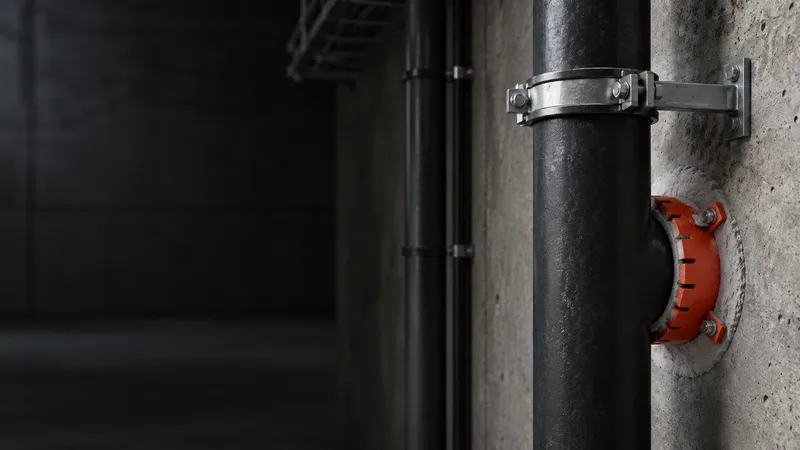
| Penetration for a private installation | A private cable or pipe can run through a communal fire separation. | Assess both the building element and the agreements about the work. |
The HOA manages the communal parts on behalf of the owners jointly. So when the HOA pays, those owners jointly bear the costs according to the applicable allocation key. That is not necessarily an equal amount per apartment.
Assessing safety and allocating costs are separate tasks
The Bbl (Dutch Buildings Decree) sets requirements for buildings and for their use. Which structural requirements apply depends, among other things, on the situation: existing building, new build or renovation.
In addition, the specific duty of care for fire-safe use under Article 6.4 Bbl applies. It is aimed at whoever uses the building or has it used. So residents and landlords also have responsibilities. Care for fire safety does not rest solely with the HOA.
When a defect is found, first have its severity and the necessary measures assessed. A discussion about payment must not allow a dangerous situation to persist.
That does not mean every defect has the same repair deadline. Have it recorded what must be done immediately, which temporary measures may be needed and when the permanent repair will follow. A schedule spread over several financial years is only justified if safety and the applicable requirements allow it. Inclusion in the long-term maintenance plan alone does not make a delay justified.
When can the HOA recover costs from an owner?
That may be the case, for example, if an owner damaged a communal fire separation during a renovation. But a defect at a home is not in itself proof that the current owner has to pay the repair costs.
Assess separately:
- The basis for payment: does the obligation follow from the regulations, agreements about the renovation or liability for damage?
- The cause: which work caused the defect, and who was responsible for it?
- The repair costs: which work is necessary and how is the amount substantiated?
The 2017 Model Regulations, for example, contain provisions on attributable damage and recovery from a liable party. Whether those provisions apply to your HOA depends on your own deed.
Example: a pipe through a communal wall
Suppose an inspection finds an inadequately sealed pipe penetration. The pipe belongs to the air conditioning of one apartment.
That is a starting point for investigation. It does not yet tell you who made the opening, which agreements applied or when the situation arose. So also ask for the work order, any consent from the HOA and the installer's handover documents.
The HOA can organise the necessary repair and at the same time investigate whether the costs can be recovered. If a claim is disputed or the work was done by a previous owner, it is wise to have a lawyer specialising in HOA law assess it.
Record what is wrong for each defect
A useful report helps with the repair, decision-making and any cost claim. Ask for:
- A recognisable location: building section, floor, apartment number and a mark on a drawing.
- Photos with context: overview and detail, preferably before and after the repair.
- A technical assessment: what function does the separation have, which requirement applies and what does not comply?
- A repair proposal: approach, urgency, accessibility and costs.
- Information about the cause: previous inspections, work orders, consents and available handover documents.
In the report, distinguish between an established cause and a suspicion. A photo of a pipe does not prove who commissioned the work.
Good documentation supports a claim, but does not guarantee that it will succeed. In proceedings, the party demanding payment must sufficiently substantiate its claim and, where necessary, provide evidence.
When repairing, ask for proof of the correct application
A product labelled ‘fire-resistant’ is not automatically suitable for every opening. The solution must match, among other things, the wall or floor, the type of pipe, the dimensions and the required performance.
So ask the contractor to record which system was applied where and which technical documentation the solution is based on. Also keep the execution and handover records.
A product certificate alone does not prove that the complete construction complies. The Informatiepunt Leefomgeving (the Dutch government's information point for the Environment and Planning Act) stresses that the application and the combination of building products must also be right.
How to prepare a decision for the members' meeting
Members must be able to see why work is needed and what it means for their contribution. Include in the proposal:
- The defects and consequences: with photos and a clear explanation.
- The necessary measures: including repair deadlines and any temporary provisions.
- The budget: with clear quantities, work and costs.
- The funding: from the current budget, the reserve fund or an additional contribution.
- Execution and inspection: who commissions the work, who checks it and where are the documents kept?
Unit prices are mainly useful when it is clear what they include. State, for example, whether accessibility, opening up and restoring finishes, documentation and VAT are included. Two penetrations can differ greatly in technical terms and therefore have a different repair price.
Also check which majority, quorum and authorisation the regulations require for the decision. Separate board powers may apply to urgent measures.
Can fire-protection repairs be paid from the reserve fund?
Repairs to communal building elements can fit within the purpose of the reserve fund. Check the nature of the expense, the provisions of the regulations and the decision-making required. Ordinary annual maintenance, on the other hand, may fall within the operating budget.
Include foreseeable maintenance and replacement of communal fire safety provisions in the long-term maintenance plan. Record in it what is needed, when it has to be done and what costs are expected. The Dutch government explains the reserve fund and the long-term maintenance plan.
Do not let necessary repairs wait for the next regular update of the long-term maintenance plan.
Frequently asked questions
If the situation does not meet the applicable requirements or poses a danger, the age of the defect is not in itself a reason to leave it. Do have it assessed which requirements apply to the building: an existing complex does not automatically have to meet every requirement for new buildings. Additional requirements may apply when renovating.
The division regulations may oblige owners to allow necessary maintenance and to give access to communal parts inside a home. Check the applicable provision and agree on access and execution in advance. If an owner refuses, legal action may be needed; a maintenance obligation does not by itself give the board permission to enter a home.
Agree work on a communal building element with the HOA in advance. Agree who commissions it, which technical requirements apply and which handover documents are needed. That way you avoid a completed repair having to be reassessed or redone.
A report gives insight into the situation. The necessary measures then have to be carried out and checked. Also record how changes after renovations will be assessed. A new cable or pipe can compromise a previously repaired fire separation again.
Need help assessing and budgeting repairs?
Grazy Brandwering helps HOA boards and property managers take stock of fire protection provisions, record defects and estimate repair costs.
See our approach to fire safety for HOAs. When you get in touch, have the building drawings, previous inspection reports and the date of the members' meeting to hand, if available. That way the survey can better match the questions your HOA has to decide on.
Want to know more about fire-resistant seals?
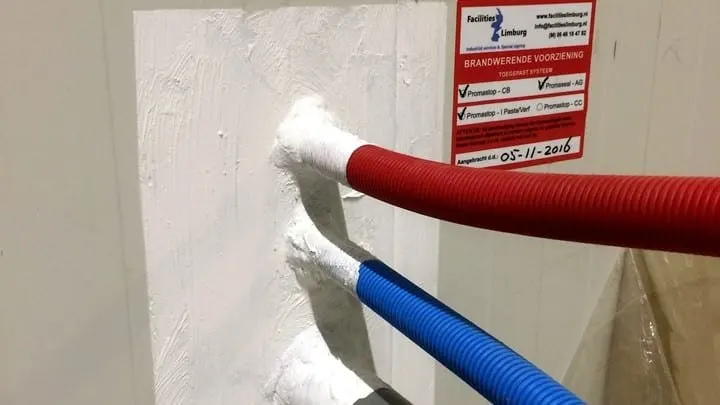
Sealing penetrations against fire with collars, wrap strips, sealant, mortar or other systems with a substantiated application, so that the WBDBO of your fire separation stays intact.
More about fire-resistant seals