
Fire safety is still too often seen as a cost rather than an investment. Yet it can pay to invest preventively rather than waiting until an incident, a failed inspection or an insurer's requirement forces you to act.
In this article you will read where the extra costs of postponing come from, what is at stake if the fire protection is not in order, and what a preventive maintenance plan looks like.
Where the extra costs of postponing come from
Repairs afterwards are rarely more expensive because of the material. The extra costs lie in everything around it:
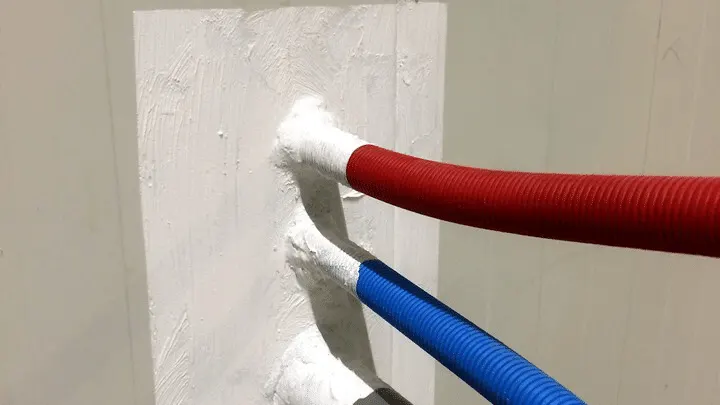
- Accessibility. During construction, a penetration is sealed from the floor in an open shaft. Afterwards, ceilings have to be opened, installations worked around and sometimes scaffolding or an aerial platform is needed.
- Tracing. An unsealed penetration behind a ceiling must first be found. Without records, that means opening and checking every room.
- Working in a building that is in use. Taking tenants, residents, patients or pupils into account takes planning and often evening or weekend work.
- Urgency. A finding by the municipality or the insurer comes with a deadline, and haste is expensive.
- Duplicate work. Whatever was repaired without records must be demonstrated again at the next check, or even opened up again.
Why prevention often works out cheaper
- Smaller interventions, lower costs: a seal replaced in good time is usually cheaper than repair after extensive damage or defects have been found
- Less business disruption: scheduled maintenance can be combined with other work, unlike urgent repair work
- Easier to demonstrate: if the municipality or insurer asks about the condition of the fire protection, a complete logbook shows what has been done
- Fewer major repairs: timely maintenance can prevent small defects from growing into large, costly repairs
What is at stake
The costs of doing nothing are less visible, but they are real:
- Enforcement. If defects are found, the municipality can impose an order subject to a penalty, with a deadline by which the repair must be completed.
- Insurance. When a policy is taken out or after a claim, insurers can ask about the condition and maintenance of the fire protection.
- Business interruption. A fire that spreads through an open penetration affects more rooms, and with them more tenants, more equipment and more days of downtime.
- Responsibility. The owner and the user each have their own responsibility for the fire safety of the building, even if a defect was caused by someone else, for example an installer.
Where prevention makes the difference
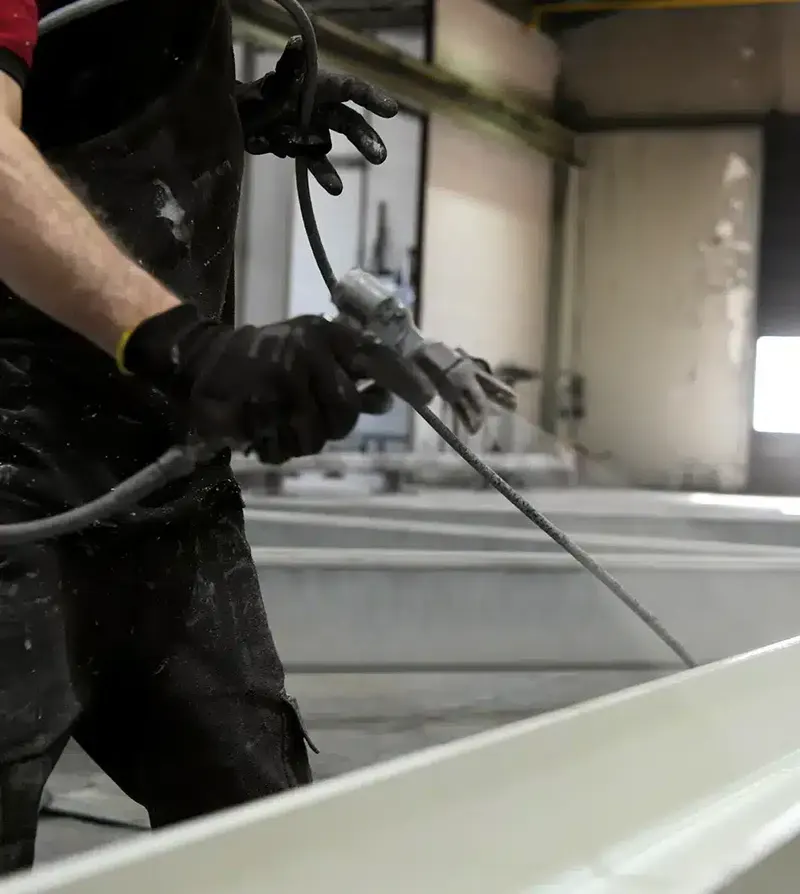
We especially see that with seals around penetrations, fire dampers, and fire-resistant coatings on steel, overdue maintenance can go unnoticed — until an inspection or, in the worst case, an incident exposes the defects.
What a preventive maintenance plan looks like
| Component | What happens | How often |
|---|---|---|
| Baseline survey | Inventory of all fire separations, penetrations, doors and dampers, recorded with photo and location | Once, as a baseline |
| Inspection round | Check for new, damaged or aged seals | Depending on use and changes, for example every year or every two years, and after every renovation |
| Fire doors | Check of self-closing, latching into the lock and the condition of seals and gaps | According to the manufacturer and the use, in practice often annually |
| Fire dampers | Function test and check of the controls | According to the manufacturer's instructions |
| Fire-resistant coatings | Visual check for damage, a coating thickness measurement if in doubt | Periodically, and after work near the structure |
| Logbook | Record every finding and every repair | Ongoing |
Such a plan fits as a fixed item in a long-term maintenance plan. How to budget for it is explained in including fire protection in the maintenance plan.
Prevention starts with every new penetration
The cheapest seal is the one applied immediately after a cable or pipe is pulled through. Agree with installers and tenants that every breach of a fire separation is reported, sealed with a system within the substantiated field of application and recorded in the logbook. That way the next inspection won't find dozens of new open penetrations.
A fixed maintenance contract with periodic inspection limits surprises and spreads the cost of fire safety evenly over time, instead of peaks during large repair projects.
Want to know what preventive maintenance would look like for your building? We're happy to think it through with you, without obligation.
Frequently asked questions
There is no fixed statutory period for seals. The duties of care under the Bbl do apply, and good documentation helps to show that the provisions are in order. How often an inspection round is needed depends on the use and on how often building work takes place; a round every year or every two years is common, plus a check after every renovation or installation project. For doors and fire dampers, the manufacturer's instructions are the starting point.
That depends on the size of the building, the number of doors and dampers and the condition of the provisions. After a baseline survey, maintenance is easy to budget as a fixed annual item.
Yes. When a policy is taken out or after a claim, insurers can ask about the condition and maintenance of fire protection provisions. An up-to-date logbook makes it easy to demonstrate.
Want to know more about maintenance & inspection?
Periodic maintenance and inspection of your fire protection, with everything verifiably recorded in a digital logbook.
More about maintenance & inspection